Retained Earnings: Definition, Formula and Examples
Posté le 29 juillet 2024 dans Bookkeeping par Isidore Monzongoyi.
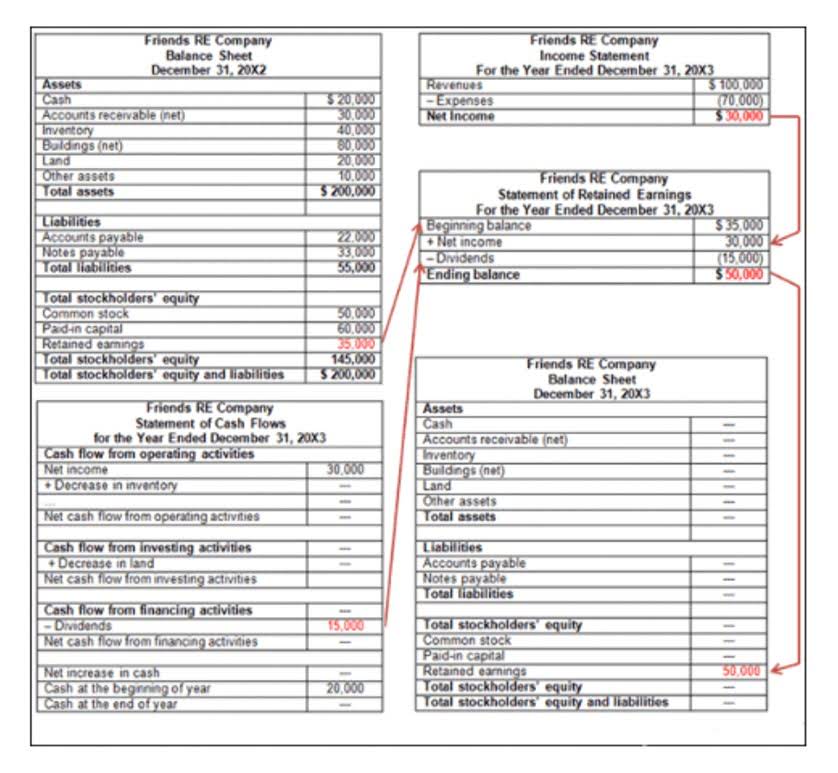
This is often pointed out as an accumulated deficit and can indicate financial trouble. The key points include understanding its components, the impact of net income and dividends, and the importance of adjustments for accurate financial reporting. Creditors review this statement to evaluate a company’s ability to generate profits and repay its debts, providing insight into its financial stability. Corrections of Errors involve adjusting retained earnings to rectify mistakes made in previous financial statements, ensuring the accuracy of financial reporting. This shows that even highly profitable companies might reduce retained earnings to return value to shareholders. Paying the dividends in cash causes cash outflow, which we note in the accounts and books as net reductions.
- Since the management is in a better position to understand the market and the company’s business, they may have a high growth projection insight.
- Investments in new projects, equipment, or other capital expenses can reduce retained earnings as funds are allocated towards growth and expansion.
- This means the company has incurred losses over a continuous period and therefore cannot distribute dividends to shareholders, increasing its risk of bankruptcy.
- When a business pays out dividends in the form of cash, it effectively gives up control of its liquid assets, which lowers their worth on the balance sheet and has an effect on retained earnings.
- Paid-in capital is the actual investment by the stockholders; retained earnings is the investment by the stockholders through earnings not yet withdrawn.
How do companies decide the proportion of net income to retain versus distribute as dividends?
Also, observing the same over a long period of time may only show the trend on the amount of cash the company is retaining. Therefore,Interpretation from an investor’s point of view needs to guided by how much income the retained earnings has been able to generate. You will also need to compare with other alternative investments to know whether they are performing better than the rest. To be able to assess how a company has been able to successfully utilize the retained earnings, you can look at the Retained Earnings To Market Value.
Step-by-Step Guide to Fibonacci Extensions in Stock Analysis
But if done incorrectly, it can negatively impact existing shareholders’ equity sections https://www.bookstime.com/ and repel potential investors, harming your bottom line. A high level of retained earnings may be a sign of solid financial health, as it shows that the company has been profitable in the past. In contrast, it may point to a business that ought to think about increasing dividend payments to its shareholders. Naturally, this is dependent on whether the business has been looking for lucrative expansion prospects. Retained earnings is all net income that has not been used to pay cash dividends to shareholders.
Q. Are Retained Earnings the same as Profit?

Retained earnings refer to the portion of net income that a company retains rather than distributing to its shareholders as dividends. These earnings are accumulated over time and can be reinvested into the company for various purposes, such as expanding operations, paying off debt, or funding research and development. Retained earnings are an essential component of shareholder equity and are often indicative of a company’s long-term financial health. By detailing the beginning retained earnings, net income, dividends paid, and the ending retained earnings, this statement offers a clear picture of how profits are utilized.
The calculation of retained earnings involves taking the retained earnings from the beginning of the period, adding it to the net income (or loss), and then subtracting dividend distributions. You may find retained earnings in the shareholders’ equity part of the balance sheet since they are a form of equity. In spite of the fact that retained profits are not assets in and of themselves, they can be put toward the acquisition of assets such as inventories, equipment, or others. Consequently, a business that has a healthy amount of retained earnings on hand would be in a good position to buy more assets or boost dividend payments to shareholders down the road. The amount of a company’s total profit that is kept or maintained for the purpose of being used in the future is referred to as the company’s retained earnings.
CAPITAL CITY TRAINING LTD

If you’re starting a business and in need of knowledge surrounding retained earnings, we have you covered. Try Wafeq, the advanced electronic accounting and invoicing system, and join the thousands of business owners who use our integrated system. We’ll explain in this article how retained earnings work, why companies rely on them, and how they can impact fixed assets the business trajectory.

What Is the Relationship Between Dividends and Retained Earnings?
- These earnings may be used for various purposes, such as financing expansion activities, new product development, acquisitions, repaying debts, or share buybacks.
- Whether you’re ready to prepare for board meetings, monitor loan compliance, or simply find the most effective ways to reinvest in your business, we’re here to help guide the way.
- In accounting, retained earnings are tracked through the retained earnings statement, which is a key component of the equity section of the balance sheet.
- When the retained earnings balance is less than zero, it is referred to as an accumulated deficit.
- The retention ratio is a useful metric for investors as it shows the proportion of a company’s revenue that stays in the business.
- Consequently, a business that has a healthy amount of retained earnings on hand would be in a good position to buy more assets or boost dividend payments to shareholders down the road.
- Net income plays a crucial role in this statement as it directly influences the amount of retained earnings.
These funds can be reinvested into the company to support its growth, such as developing a new software product or hiring additional staff. This guide will break down what retained earnings are, how to calculate them, and why they matter. It’s time to take the mystery out retained earnings represents of this vital financial term so you can make smarter, more informed business decisions. Yes, retained earnings are a key component of equity because they represent the part of net income a company retains and reinvests into the business. Management uses this statement to make informed decisions on profit reinvestment, dividend policies, and overall financial strategy. Changes in Accounting Policies require adjustments to retained earnings to reflect the new methods of accounting, ensuring consistency and comparability in financial reporting.
Where Is Retained Earnings on a Balance Sheet?
Retained earnings indicate how efficiently a company has managed its past profits, while revenue demonstrates its current financial strength. Analyzing both figures together can offer valuable insights into a company’s overall financial position and future prospects. Calculating retained earnings involves subtracting any dividends (both cash and stock) from the beginning retained earnings and adding the net income for the current period. This calculation provides insight into the overall financial health of a company, as it reveals how much net income has been generated and reinvested in the business over time. For example, retained earnings from previous financial periods may exceed the net losses of the current financial period, allowing the total retained earnings to maintain a positive value.